How to Take Care of Cockatoos
Good cockatoo care comes down to five things: a varied, pellet-based diet, a large cage, several hours of daily interaction, plenty of sleep, and regular avian vet care. Get those right and a cockatoo thrives for decades; get them wrong and problems like screaming and feather-plucking appear fast.
Cockatoos, like many parrots, can be immensely rewarding pets because of their social nature and intelligence. However, these positive traits can also create problems if the birds are not cared for properly, as they need a lot of entertainment to be happy. Set up a good environment for your bird, then provide appropriate care and food. Make sure to engage your bird often to keep it happy and healthy.
Cockatoos are not difficult to care for so much as demanding – they need your time as much as your money.
We hand-raise ten species and send every bird home with a full care manual, so this cockatoo care guide is the essential version of what we teach new owners.
What to feed a cockatoo
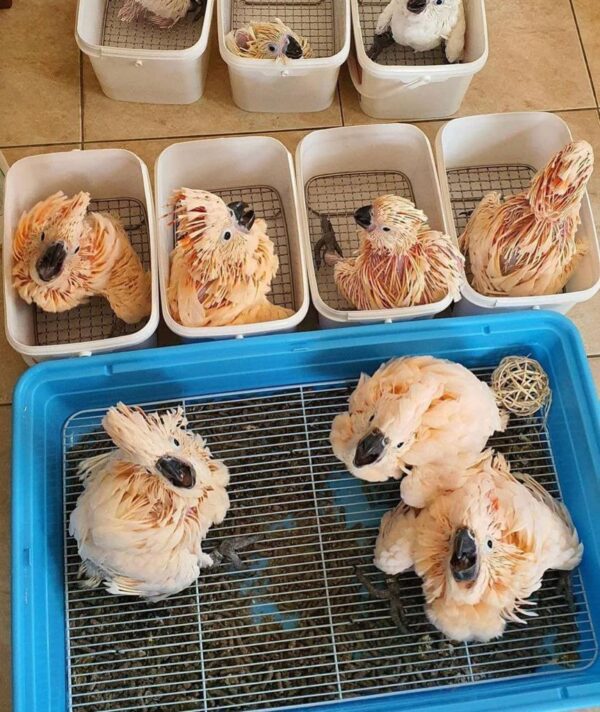
Diet is the single most important part of cockatoo care. Build it on a base of high-quality formulated pellets, which should make up around 60 to 70% of the diet, then add fresh vegetables and leafy greens, some fruit, and a small amount of nuts and seed as treats. Avoid an all-seed diet – it is fatty, nutritionally poor, and the leading cause of obesity and early death in pet cockatoos. Never feed avocado, chocolate, caffeine, alcohol or anything salty; all are toxic to birds. Provide clean, fresh water daily.
Cage size and setup
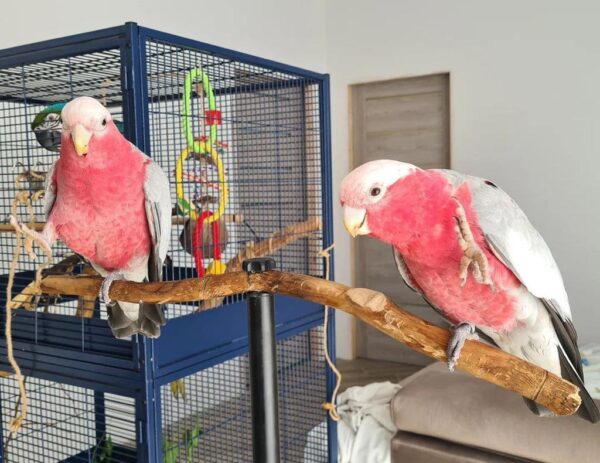
Cockatoos are large, active and powerful, so buy the biggest, sturdiest cage you can – a wide cage matters more than a tall one, since these birds climb and flap. Choose heavy-gauge metal with a secure lock (clever species like the Goffin’s learn to escape). Fit varied natural-wood perches of different diameters, a few feeding stations, and a top that opens into a play area. Place the cage against a wall in a busy family room, out of draughts and away from the kitchen, where non-stick fumes can be fatal.
Attention, enrichment and out-of-cage time
This is where most cockatoo care goes wrong. Cockatoos are intensely social and highly intelligent, and they need several hours of interaction and supervised out-of-cage time every day. Give them a constant rotation of destructible toys – shreddable wood, cardboard and foraging puzzles – to keep that busy beak and brain occupied. A cockatoo that is left alone and under-stimulated will scream, and may begin plucking its own feathers, which is difficult to reverse. Enrichment is not a luxury; it is core care.
Sleep and routine
Cockatoos need 10 to 12 hours of quiet, dark sleep each night. A sleep-deprived cockatoo becomes irritable and prone to hormonal behaviour, so cover the cage or use a separate sleep cage in a quiet room, and keep feeding, play and bedtime on a consistent daily schedule. Predictable routines make for a calmer, happier bird.
Grooming, bathing and nails
Cockatoos produce fine feather dust, so regular bathing keeps their skin and plumage healthy and cuts down on dust – offer a shallow dish, a gentle mist spray, or a warm shower a few times a week. Beaks and nails usually wear naturally with good perches and chew toys, but an avian vet can trim them if needed. Never clip a companion cockatoo’s wings without good reason and proper technique.
Health and the avian vet
Find a specialist avian vet before you need one, and book a check-up at least once a year – birds instinctively hide illness, so problems are often advanced by the time they show. Watch for warning signs such as fluffed feathers, loss of appetite, changes in droppings, or sitting on the cage floor, and act quickly if you see them. Set aside an emergency fund, as avian care can be costly. Every one of our cockatoo birds for sale comes with a 100% health guarantee and a detailed care manual to help you start right.
Common cockatoo care mistakes
- Feeding an all-seed diet instead of pellets and fresh food.
- A cage that is too small, or too little out-of-cage time.
- Not enough sleep, or an inconsistent routine.
- Too little enrichment, leading to screaming and feather-plucking.
- Over-cuddling a young bird, which can create hormonal and behavioural problems.
- Skipping avian vet visits until the bird is visibly sick.
Cockatoo care FAQ
Are cockatoos hard to take care of?
They are not complicated, but they are demanding. The care itself – diet, cage, enrichment, sleep, vet visits – is straightforward; the challenge is the sheer amount of daily time and attention they need over a very long life.
What do cockatoos eat?
A healthy cockatoo eats mostly formulated pellets, with fresh vegetables, some fruit, and limited nuts and seed as treats. Avoid all-seed diets and never feed avocado, chocolate or caffeine.
How much attention does a cockatoo need?
Several hours of interaction and supervised out-of-cage time every day, plus enrichment when you are not available. Cockatoos are among the most social of all pets.
How big should a cockatoo cage be?
As big as possible – buy the largest, sturdiest cage you can fit, favouring width for climbing and flapping, with secure locks and a play top.
Cockatoo care is really about commitment: give a cockatoo the diet, space, sleep, stimulation and veterinary care it needs, and you will share decades with one of the most rewarding companions in the world.
 English
  French
  Spanish
  Portuguese